Posts

An Introduction to Stepper Motors: What They Are and How They Work
Image
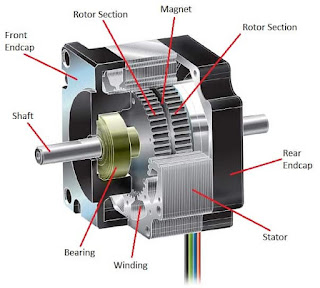
Stepper motors allow for precise movement control, making them an essential component in many modern machines and applications. But what exactly are stepper motors and how do they work? In this short guide, we'll explore the mechanics behind their precise movements. Definition A stepper motor is a type of electric motor that rotates a specific number of degrees in response to a series of electrical pulses. Unlike other types of motors, stepper motors move in small, precise steps rather than continuously rotating. This makes them suitable for applications requiring precise movement control, such as robotics or automated manufacturing. Component Stepper motors are designed with a rotor, the moving component of the motor, and a stator, the stationary part. The rotor comprises a series of teeth, or poles, which align with the stator's magnetic field when a current is applied. The stator comprises two or more poles, which are energized sequentially to create a rotating magnetic fie...

6 Benefits of Using Small DC Gear Motors

Image
Small DC gear motors are an essential component of many mechanical systems. They provide the necessary torque and speed required for a wide range of applications. These motors are widely used in robotics, automotive, aerospace, medical, and consumer electronics industries. Why should you use a small DC gear motor ? Read on to find out. Low Maintenance DC gear motors require minimal maintenance, as they are simple and reliable. They typically require little attention, making them ideal for applications where regular maintenance and servicing are not feasible. Moreover, their simple design and robust construction allow for a long service life. Compact Size A DC gear motor is designed to be compact and lightweight. This makes it ideal for applications where space is limited. The compact size allows for integration into small devices, such as medical equipment, consumer electronics, and robotics. Related Links: https://www.catskill.online/new-york/isl-products-international-ltd https://bus...

Top 7 Benefits Of Using DC Gear Motors

In today's fast-paced world, efficiency and reliability are two of the most sought-after qualities in any machinery. DC gear motors have gained popularity in recent years due to their superior performance and versatility in various applications. Let's discuss the top 7 benefits of using DC gear motors and how they can improve your operations and increase your bottom line. 1. Cost-Effectiveness DC gear motors are extremely cost-effective, as they require minimal maintenance and are much cheaper than other motor types. Their economies of scale allow for larger quantities to be purchased and used for many applications. 2. High Torque They are able to generate a high torque output, which is necessary for applications that require a lot of power. These heavy-duty applications include conveyor belts and robotics. 3. Versatility DC gear motors are incredibly versatile, as they can be used in a wide range of applications. You can use them to power anything from small toys to industrial...

Brushless DC Motors: All You Need To Know

Are you curious about the technology behind electric cars, drones, and industrial automation systems? If so, you might have heard the term "brushless DC motors" (BLDC) thrown around. These innovative motors have replaced traditional brushed motors in many applications due to their superior efficiency, reliability, and longevity. Let's dive into the fascinating world of  brushless DC motors . How do brushless DC motors work? Brushless DC (BLDC) motors are a type of electric motor that use electronic commutation instead of brushes and a mechanical commutator to switch the current flow in the motor windings. This design eliminates the need for brush maintenance and allows for higher speed and efficiency. The core components of a  BLDC motor  are the stator and rotor. The stator is the motor's stationary part and contains the motor windings, typically made of copper wire wrapped around the stator's teeth. The rotor is the rotating part of the motor and contains the pe...

Introduction To Stepper Motors

Image
Have you ever wondered what drives the smooth, precise movements of your 3D printer, CNC  machine, or robot? The answer is a stepper motor ! In this article, we'll explore the basics of stepper motors. How do stepper motors work? Stepper motors are electric motors that convert digital pulses into precise mechanical movements. They are used in numerous applications, from controlling robots to powering printers and scanners. A stepper motor is made up of two main components; the rotor and the stator. The rotor is the part that moves and usually comprises a permanent magnet or a soft iron core. On the other hand, the stator is the stationary part of the motor and consists of two or more wire coils arranged around a core. The rotor and stator work together to create the stepper motor, with the rotor providing movement and the stator providing power. This construction ensures that the motor can be usedn in various applications, from small robotics to large-scale industrial machines. The...

How Does A Coreless DC Gear Motor Work?

Image
Coreless DC gear motors are an incredibly versatile and efficient type of electric motor. In this post, we'll explore how coreless DC gear motors work and discuss their advantages for applications such as robotics and automation. Coreless DC gear motor technology Coreless DC gear motors operate in much the same way as traditional electric motors. They use a set of magnets to create an electromagnetic field which is then used to turn an axle and generate rotational power. However, coreless DC gear motors are constructed without an iron core, instead relying on copper windings, resin cores, and permanent magnets for their operation. This eliminates the weight of the iron core and allows the motor to be lighter and more efficient. Related Links: Let's now discuss the benefits of using Coreless DC gear motors: 1. High-efficiency Coreless DC gear motors are extremely efficient, with low internal resistance, allowing them to keep operating in conditions where other electric motor de...

Germicidal Lamp Electronic Ballasts: Why Are They Important?

Image
UV lamps have gained popularity over the last few years. In this post, we will discuss germicidal lamp electronic ballasts. But first, we need to understand what germicidal lamps are. A germicidal lamp is a type of lamp that uses ultraviolet (UV) light to kill germs and bacteria on surfaces. Germicidal lamps are commonly used in hospitals, laboratories, and even homes. The UV light emitted by these lamps can destroy the DNA of bacteria, viruses, and other microorganisms, effectively killing them and preventing them from reproducing. This makes germicidal lamps an effective tool for sterilizing surfaces and reducing the spread of infection Related Links: What are germicidal lamp electronic ballasts? A germicidal ballast is a device used in conjunction with a germicidal lamp to control the flow of electricity to the lamp. The ballast regulates the current and voltage supplied to the lamp, ensuring that it operates at the correct intensity and frequency to produce the UV light needed to k...