Posts

What distinguishes brushless dc motors from standard brushed dc motors?
Image
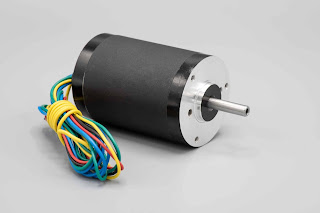
What distinguishes brushless dc motors from standard brushed dc motors? A large number of electrical and mechanical applications rely on the implementation of motors. Firstly, it’s important to appreciate that DC motors offer more precise control, compared to AC motors. Also, DC motors are much more suitable for applications that require the active management of speed, positioning and torque.  There are two variations of commonly used DC motors: brushed motors and brushless motors (also referred to as ‘BLDC’ motors). Brushed motors, as their name implies, are motors that feature brushes to commutate the power within the motor and make them operate. Brushless DC motors, on the other hand, replace mechanical commutation with electronic functioning.  The use of both brushless and brushed DC motors is common across multiple industries. In simple terms they function on the principle of magnetic attraction and repulsion. Selecting between the two depends on the specific requirement...

An Overview Of Stepper Motors - ISL Products International Ltd.

Image
A stepper motor can be described as a brushless electric motor that separates a complete rotation into several equal movements. Stepper Motors are controlled by electrical pulses sent from dedicated Stepper Motor Drivers. Stepper motor drivers are used to control stepper motors by holding fixed-step angles and controlling the rate of speed. Stepper motors can be controlled via an open, or a closed-loop system. Stepper motors are manufactured with differing step angles, most commonly 1.8 degrees, which equates to about 200 steps per revolution.   There are set, industry defined standards for  stepper motor   and producers of electrical products, equipment and wiring that are used in industrial facilities. Hybrid stepper motors are one such product categorized by the NEMA, designating each with a frame size (such as; 11, 23 or 34). As an example, a NEMA 23 size motor would have a mounting face size of 2.3 inches square, and subsequently, a NEMA 17 hybrid stepper m...

Examining a 12V DC gear motor

Automation allows for increased efficiency, as well as affordability for businesses worldwide. Many electronic devices in our homes and in our offices are fitted with DC motors. Increasingly smart technology uses network connectivity in order to operate automated devices remotely. For example, a motorized TV mount uses 12V DC gear motors  that feature sensors that monitor changes in motion. Direct electrical energy is converted into mechanical energy by DC motors, which allows for automated equipment to be battery-powered, thus opening the door to a much broader range of applications. The wide variety of devices we use in our daily lives that are fitted with a DC gear motor includes consumer electronics, toys, hygiene and healthcare products, as well as power tools. DC gear motors are a great solution for applications that require intermittent power, high torque, a DC power supply, and are cost-efficient. A few considerations to bear in mind While there are many advantages to 12V D...